Category: Adolescent Development

Teenagers in the Age of AI: Learning, Privacy, and the Future They Are Entering

From global AI shifts to data risks and digital identity, what does this mean for adolescents and classrooms in Pakistan?

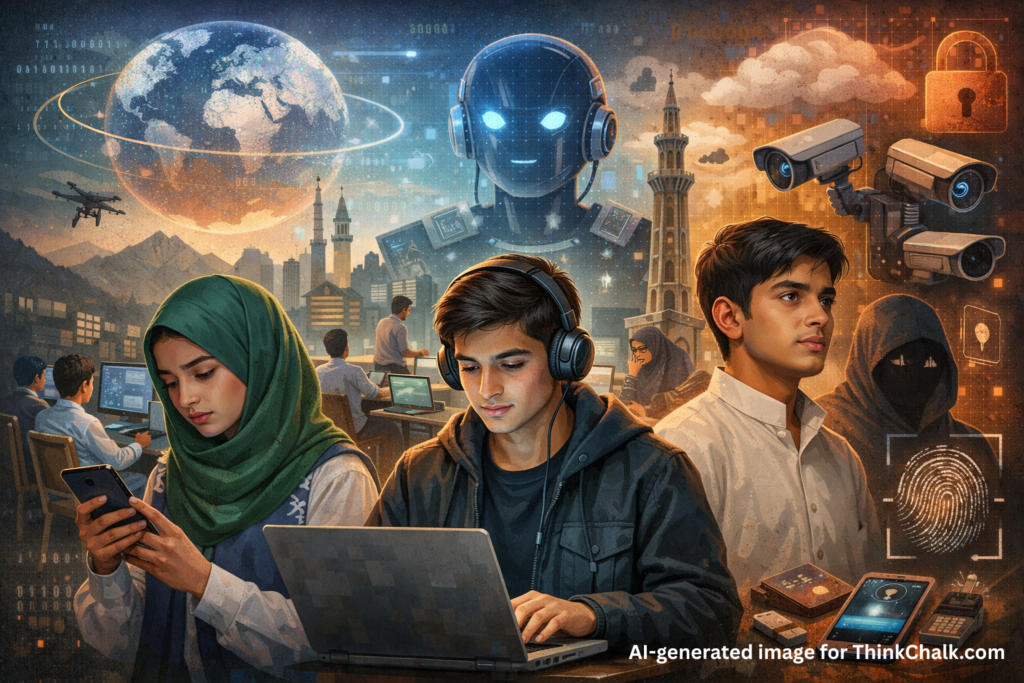
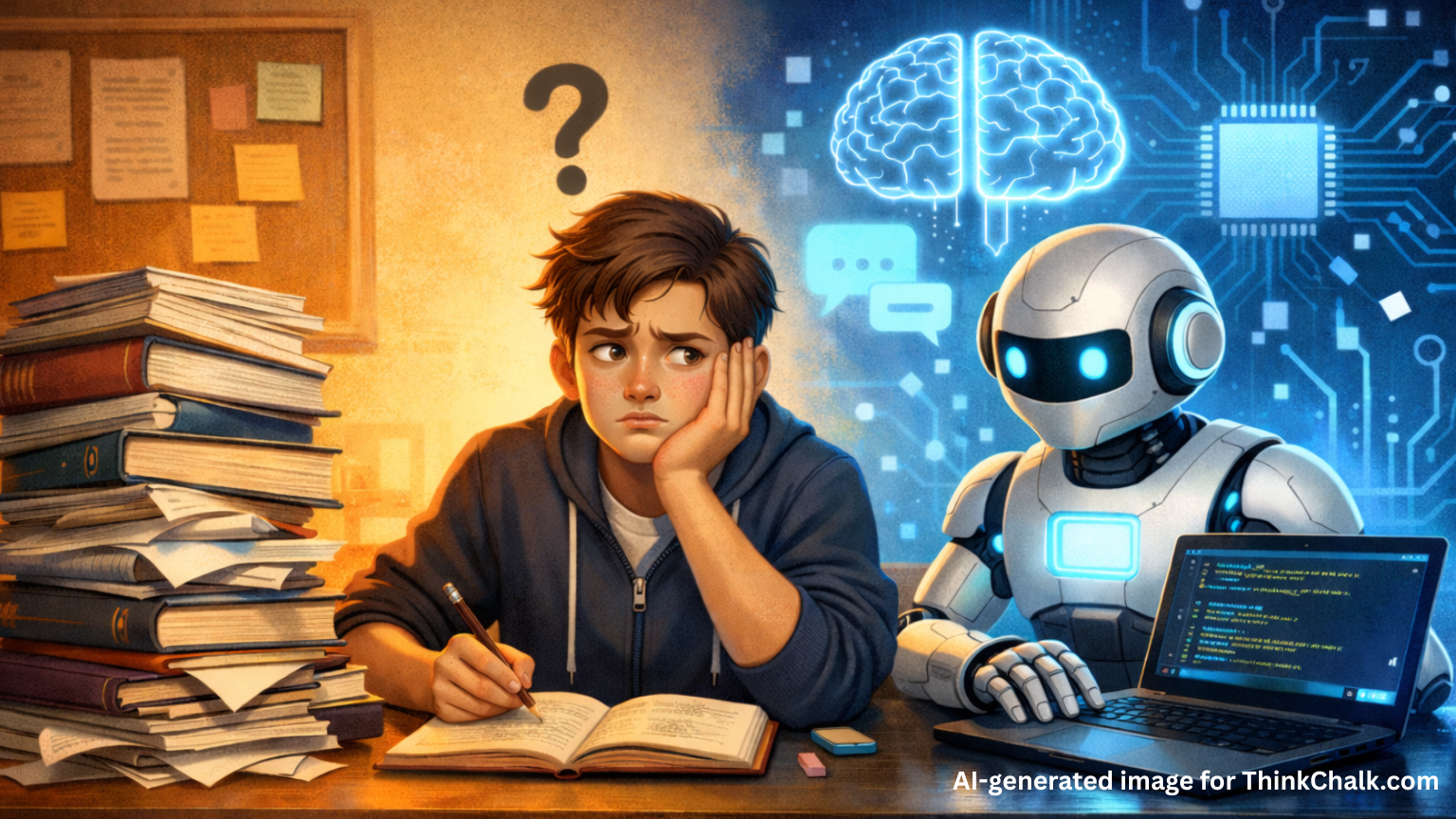
Teenagers today are growing up with artificial intelligence not as a future concept, but as part of their everyday learning experience.

From generating homework answers to asking complex questions, many students are already interacting with AI tools in ways that were unimaginable just a few years ago. For them, AI is not something new, it is simply part of how learning now happens.

Yet while the use of AI is increasing rapidly, the understanding of its implications is not growing at the same pace. This raises an important question for education: Are we preparing teenagers to use AI tools, or to understand the world they are entering through AI?

Continue reading “Teenagers in the Age of AI: Learning, Privacy, and the Future They Are Entering”

Helping Teenagers Think in an Age of Polarisation

Why schools must teach thinking, not just information, in a world of global uncertainty

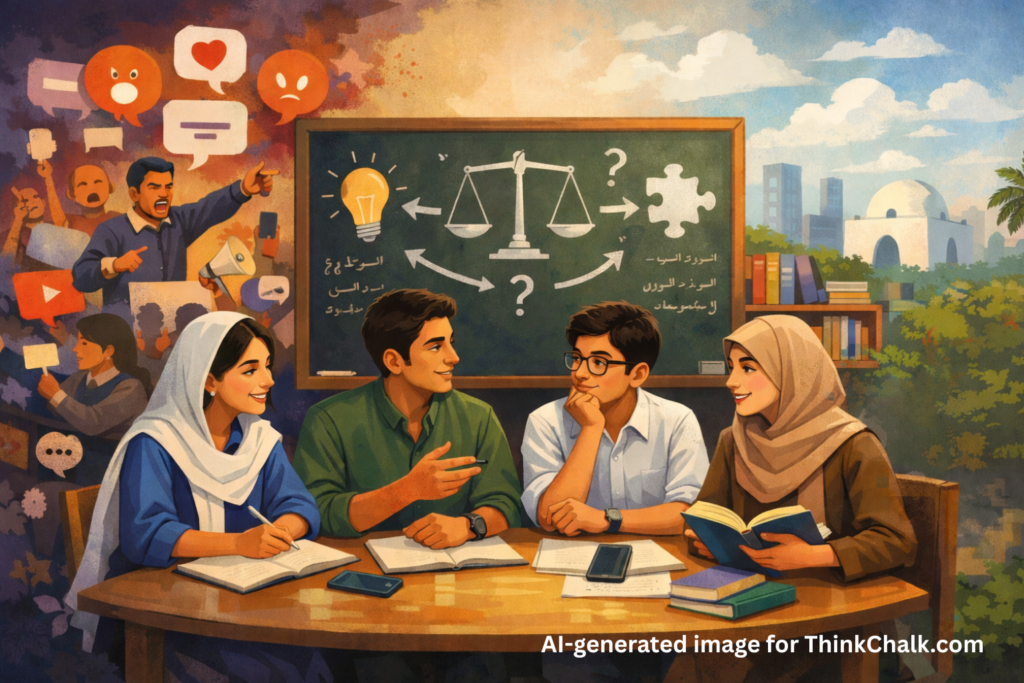
Teenagers today are growing up in a world that feels more connected than ever, yet more divided than ever. A student scrolling through social media in Karachi, Gilgit, Lahore, or Hunza can instantly encounter intense debates about wars, political conflicts, cultural identity, religion, or global injustice. News travels fast, but so do opinions. Within minutes, a teenager can be exposed to strong emotional narratives that demand loyalty, outrage, or immediate judgment.

Yet many young people are navigating this information-heavy world without the tools to process it critically.

The challenge facing education today is not only about what students learn. Increasingly, it is about how students learn to think about the world around them.

Continue reading “Helping Teenagers Think in an Age of Polarisation”

Homework in the Age of AI: Does It Still Make Sense?

Reflective classroom perspective + practical ways forward

In recent classroom visits and conversations with teachers I mentor, a pattern keeps emerging. Students in secondary classes are handing in homework that looks complete and correct. Yet when teachers try to discuss that homework in class the next day, many students struggle to explain what they actually understand.

At first glance, it seems like homework is working; notebooks look good, and assignments are done on time. But the deeper question is: Are students really learning?

Many students now admit that homework, which once took an hour, can be finished in minutes using AI tools on their phones. This pressure to “get work done fast” is creating a new classroom reality. Teachers are unsure how to respond. Parents are relieved homework is done, but can’t tell whether real learning is happening.

This situation has made me reflect deeply:
If homework is getting completed but understanding is not growing, does traditional homework still serve its purpose in today’s secondary classrooms?

Continue reading “Homework in the Age of AI: Does It Still Make Sense?”

Not ‘Mazaaq’: Bullying & Cyberbullying in Pakistan, How It Hurts Our Students and What Schools Can Do Better

There’s a moment many teachers recognise. A student who used to raise their hand is now sitting quietly. A confident child begins asking, ‘May I go to the washroom?’ as soon as group work starts. Someone’s attendance slips from Monday to Wednesday, then a full week. When you finally ask, softly, ‘Kya masla hai?’ you often get the same answer: ‘Nothing, miss/sir. Bas… aise hi.

In our schools across Pakistan, bullying rarely arrives as a clear headline. It shows up like a fog: small comments, private jokes, class WhatsApp groups, a nickname that becomes a label, a photo edited and shared, a voice note forwarded ‘for fun.’ The child keeps going to school, but something inside them stops feeling safe.

And that’s the real issue: bullying isn’t only about a bad moment. It’s about a student’s sense of safety, belonging, and izzat.

Continue reading “Not ‘Mazaaq’: Bullying & Cyberbullying in Pakistan, How It Hurts Our Students and What Schools Can Do Better”

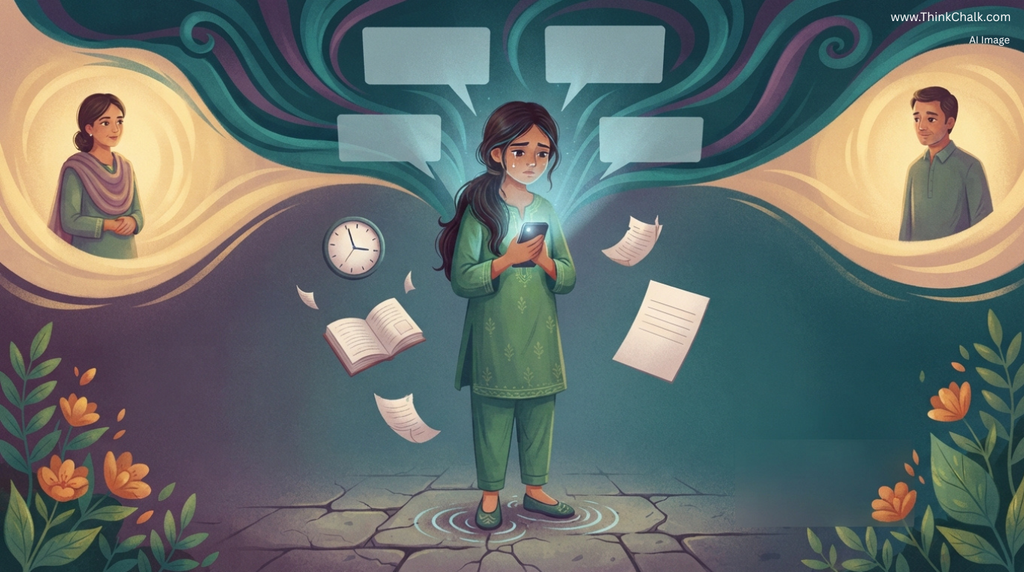
Young Lives, Heavy Pressure: Listening to What Our Students Are Carrying

Trigger warning: this post discusses suicide and self-harm. If you or someone you know is in immediate danger, contact local emergency services or a mental health helpline immediately. In Pakistan, national helplines and crisis support services are available to offer confidential support.

In recent months, we have seen a painful pattern repeating itself across Punjab: university students, bright, young people who should be building futures, are taking desperate steps or attempting to take their lives. These are not isolated tragedies; they are a mirror reflecting pressures that many families do not see clearly until it is too late. Recent reporting from Lahore and elsewhere has linked some of these incidents to academic pressure, failed relationships, and family conflicts, and universities and families alike are asking hard questions about what went wrong. (The Express Tribune, AAJ TV)

As a parent, it is natural to react with shock and guilt: ‘Kiya mein jaan sakta tha? Kiya mein pehlay qadam utha sakta tha? (Could I have known? Could I have acted sooner?) Those are painful but familiar questions. We also need to step back and look more critically at the systems surrounding our children, at what we ask of them, what schools expect, and how families respond when a child shows signs of pain. This is not about assigning blame to any single person. It’s about noticing patterns and changing them.

Continue reading “Young Lives, Heavy Pressure: Listening to What Our Students Are Carrying”

Mental Health Is Not “Drama”: Why Does Even “Strong Bachay” Need Support

Understanding Stress, Anxiety & Burnout in Our Pakistani Children: A Quiet Moment, Many Parents Will Recognise

In many Pakistani homes, the value of strength is instilled from an early age.

Rona nahin – Don’t Cry
Strong bano – Be Strong
Sab theek ho jata hai – Everything will be fine

These words are usually said with love. Parents want their children to thrive in a challenging world. But sometimes, without realising it, these same words send another message: Your feelings are not important.

When a child says, I’m tired, and we reply, Yeh koi baat hoti hai?

When a teenager says, Mujh se aur nahin ho raha, and we say, Drama band karo.

That is where the silence begins.

Continue reading “Mental Health Is Not “Drama”: Why Does Even “Strong Bachay” Need Support”

Career Confusion: Science, Commerce, Arts or “Bas jo mile”

Why teens feel lost about subject choices, fear disappointing parents, and struggle to see value beyond “doctor, engineer, CSS.”

Choosing subjects after middle school is one of those small crossroads that feels enormous when you’re living it, both for the child and the parents. In Pakistan, that crossroad often looks like a short menu: Science (pre-med/pre-engineering), Commerce (business/accounting), Arts (humanities/social sciences), or “Bas jo mile”, take whatever seat opens up. Why does a 14- or 15-year-old face such pressure and confusion? Let’s unpack the feelings behind the choices and offer a kind, practical way forward for parents and families.

Continue reading “Career Confusion: Science, Commerce, Arts or “Bas jo mile””

Why Do Teens Leave School? A Simple Reflection on Gender, Culture & Education in Pakistan

Every child deserves to learn with confidence, feel safe while travelling to school, and dream about a bright future. But for many teenagers in Pakistan, especially girls living in rural areas, staying in school becomes more challenging as they grow older. When a girl drops out, her education doesn’t just pause; her opportunities, independence, and future possibilities shrink with it.

In this reflective piece, I aim to explore why many adolescent girls drop out of school and how parents, teachers, and communities can collaborate to support their continued learning.

What the numbers show and what families feel

Research from the World Bank highlights that girls in rural Pakistan face the highest dropout rates due to poverty, early marriage, unsafe travel, and lack of school facilities. Challenges and Solutions for Girls’ Education in Pakistan.

Continue reading “Why Do Teens Leave School? A Simple Reflection on Gender, Culture & Education in Pakistan”

Helping Teens Breathe: Supporting Adolescent Mental and Emotional Well-Being

I often find myself pausing at the school gates, watching groups of teenagers walk in, some laughing, some silent, some with headphones plugged in, all carrying invisible loads on their shoulders. As an educator and parent, I can’t help but wonder: What kind of world are they growing up in?

It’s a world that expects them to excel, to fit in, to stand out, and to do all of that gracefully, all before they even understand who they truly are.

In writing this reflection, I wanted to look beyond test scores and report cards, and into the hearts of adolescents navigating their mental and emotional worlds. Whether in the busy school corridors of Karachi or the diverse classrooms of London, many young people share the same quiet struggle balancing their dreams with the weight of expectations.

Continue reading “Helping Teens Breathe: Supporting Adolescent Mental and Emotional Well-Being”

The Power of Deep Curiosity: Why We Fear Asking Questions

Questions are the fuel for learning, so why do we sometimes fear asking them?

Last week, during a class discussion on the history of pandemics, a parent joined my session to observe her child’s learning. I often welcome parents to sit in and experience how their children engage in inquiry and discussion.

After the discussion, one of my students raised his hand and asked, “Sir, in medieval times, people did cover their faces, so what made the virus spread so fast?” For many, this might have seemed like an “obvious” question. We had already discussed this point earlier in class, using COVID-19’s rapid spread in 2020 as a reference. But instead of focusing on the content, what caught my attention was the parents’ reaction, a subtle, sarcastic smile that everyone noticed, including the student who had asked.

I didn’t respond right away. Instead, I encouraged the class to answer collaboratively, allowing them to revisit their understanding and refine their explanations. Later, as the class ended, the parent thanked me for letting her observe the session. Before she left, I gently asked about her smile. She said, rather comfortably, that she thought the question had already been discussed and felt the student must not have been paying attention, in short, that it was a “stupid” question.

Her response made me pause. Was the student inattentive, or was he genuinely curious to make sense of something in his own way? Was his question really “stupid,” or was it simply a reflection of how he processes understanding? And more importantly, what message would I send if I dismissed such a question as unnecessary or foolish?

Continue reading “The Power of Deep Curiosity: Why We Fear Asking Questions”