AI Is Already in Our Classrooms. Are Our Learning Practices Ready?

Reflections on Generative AI, Learning, and What the Pakistan Education System Must Rethink

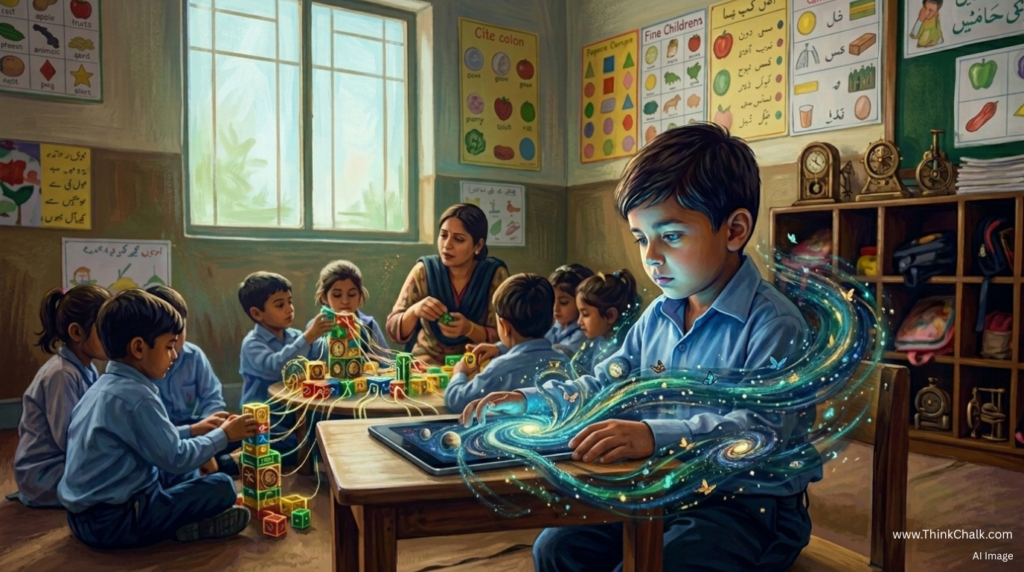
Artificial intelligence did not wait for policy approvals, curriculum updates, or teacher training workshops. It entered classrooms quietly through homework help, essay drafts, exam preparation, and late-night study sessions. Long before schools decided what to do about it, students had already figured out how to use it.

In Pakistan, this reality feels especially sharp. Our education system has always rewarded correct answers more than deep understanding. In such a context, generative AI can easily become a powerful shortcut, producing fluent responses without necessarily strengthening learning. The risk is not that students are using AI. The risk lies in how they use it and in what our systems encourage them to value.

This is why the OECD Digital Education Outlook 2026: Exploring Effective Uses of Generative AI in Education deserves careful attention. Rather than celebrating AI as a solution or warning against it as a threat, the report offers a more uncomfortable insight: improved performance does not automatically mean improved learning. In some cases, it may even hide learning loss.

Continue reading “AI Is Already in Our Classrooms. Are Our Learning Practices Ready?”

Beyond Rote: Teaching Skills that Matter in a Test-Driven World

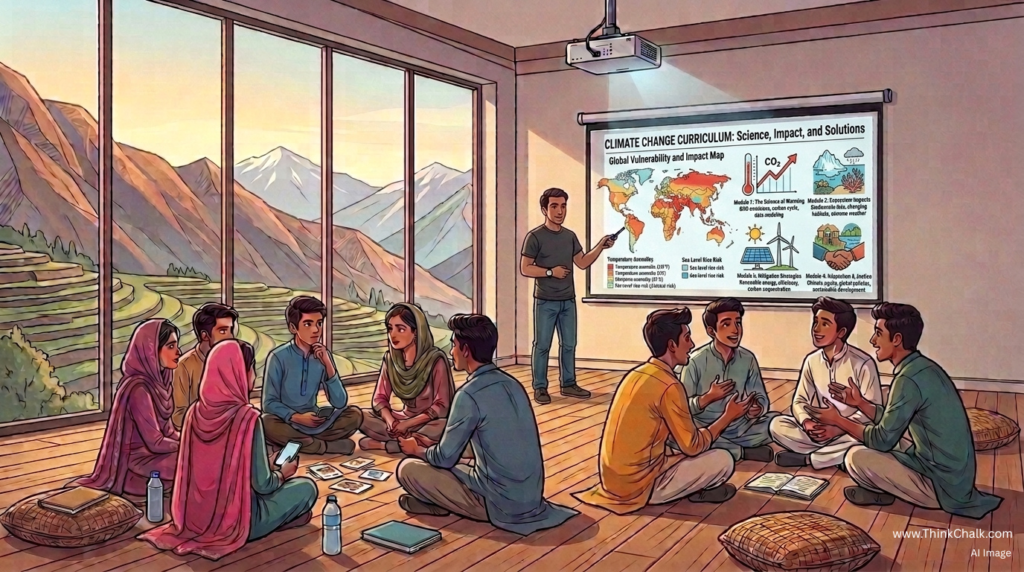
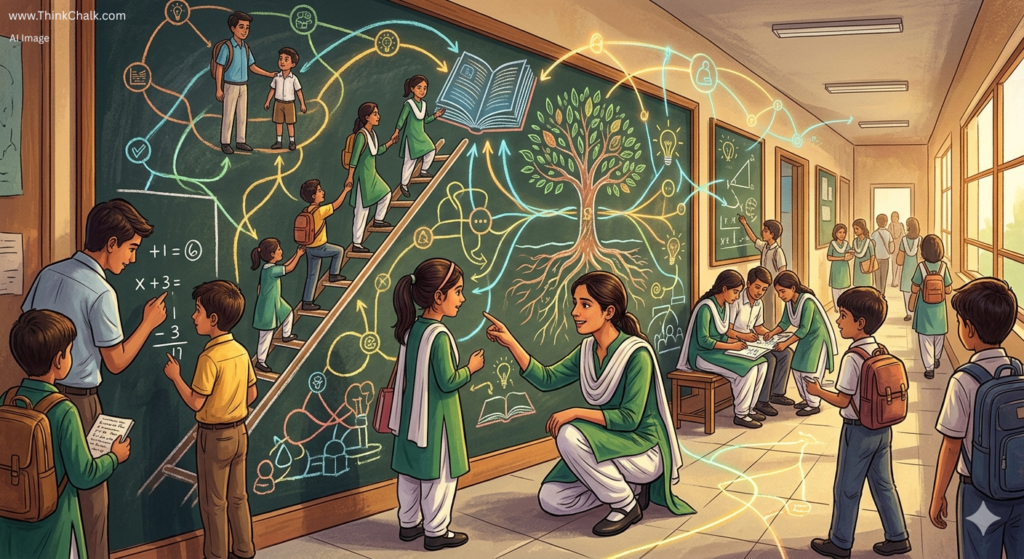
I’ve spent years moving between classrooms, teacher-training sessions, and mentoring conversations with school leaders. No matter where I go, a private school in Karachi, a public school workshop in South Punjab, or an online teacher circle, the same concern keeps surfacing: our children can memorise, but can they think critically?

This reflection grows out of that discomfort. It is not an attack on exam marks that matter in Pakistan, and families are right to care about them. But it is a question about balance. How do we keep exam success while also preparing students for a world that demands critical thinking, creativity, collaboration, and adaptability?

Continue reading “Beyond Rote: Teaching Skills that Matter in a Test-Driven World”

Not ‘Mazaaq’: Bullying & Cyberbullying in Pakistan, How It Hurts Our Students and What Schools Can Do Better

There’s a moment many teachers recognise. A student who used to raise their hand is now sitting quietly. A confident child begins asking, ‘May I go to the washroom?’ as soon as group work starts. Someone’s attendance slips from Monday to Wednesday, then a full week. When you finally ask, softly, ‘Kya masla hai?’ you often get the same answer: ‘Nothing, miss/sir. Bas… aise hi.

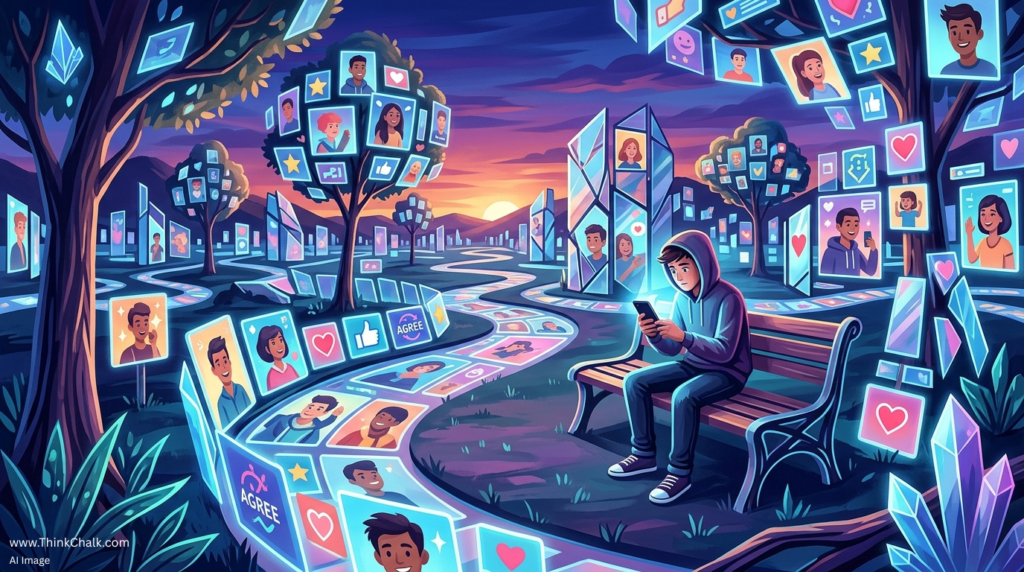
In our schools across Pakistan, bullying rarely arrives as a clear headline. It shows up like a fog: small comments, private jokes, class WhatsApp groups, a nickname that becomes a label, a photo edited and shared, a voice note forwarded ‘for fun.’ The child keeps going to school, but something inside them stops feeling safe.

And that’s the real issue: bullying isn’t only about a bad moment. It’s about a student’s sense of safety, belonging, and izzat.

Continue reading “Not ‘Mazaaq’: Bullying & Cyberbullying in Pakistan, How It Hurts Our Students and What Schools Can Do Better”

Young Lives, Heavy Pressure: Listening to What Our Students Are Carrying

Trigger warning: this post discusses suicide and self-harm. If you or someone you know is in immediate danger, contact local emergency services or a mental health helpline immediately. In Pakistan, national helplines and crisis support services are available to offer confidential support.

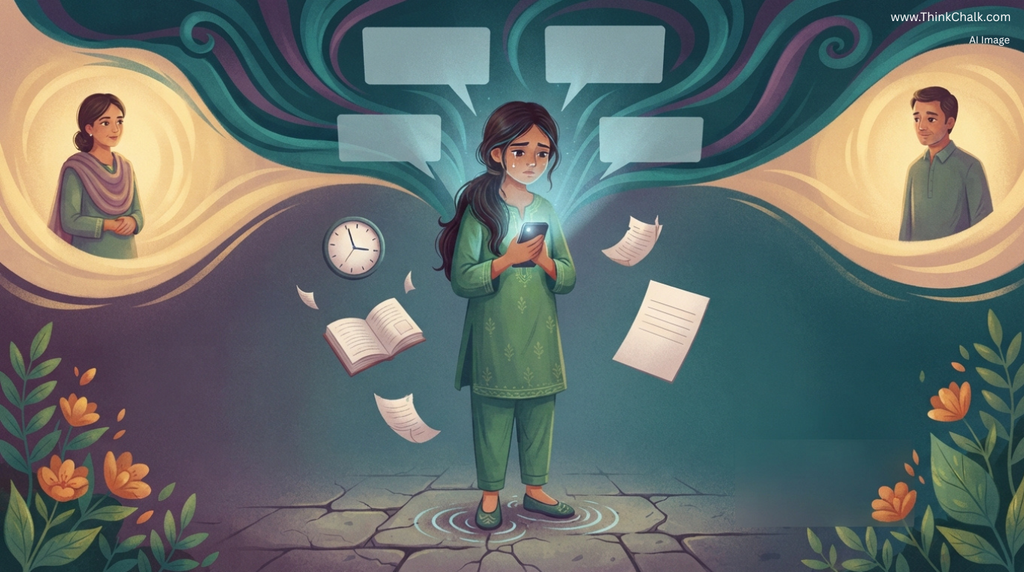
In recent months, we have seen a painful pattern repeating itself across Punjab: university students, bright, young people who should be building futures, are taking desperate steps or attempting to take their lives. These are not isolated tragedies; they are a mirror reflecting pressures that many families do not see clearly until it is too late. Recent reporting from Lahore and elsewhere has linked some of these incidents to academic pressure, failed relationships, and family conflicts, and universities and families alike are asking hard questions about what went wrong. (The Express Tribune, AAJ TV)

As a parent, it is natural to react with shock and guilt: ‘Kiya mein jaan sakta tha? Kiya mein pehlay qadam utha sakta tha? (Could I have known? Could I have acted sooner?) Those are painful but familiar questions. We also need to step back and look more critically at the systems surrounding our children, at what we ask of them, what schools expect, and how families respond when a child shows signs of pain. This is not about assigning blame to any single person. It’s about noticing patterns and changing them.

Continue reading “Young Lives, Heavy Pressure: Listening to What Our Students Are Carrying”

Mental Health Is Not “Drama”: Why Does Even “Strong Bachay” Need Support

Understanding Stress, Anxiety & Burnout in Our Pakistani Children: A Quiet Moment, Many Parents Will Recognise

In many Pakistani homes, the value of strength is instilled from an early age.

Rona nahin – Don’t Cry
Strong bano – Be Strong
Sab theek ho jata hai – Everything will be fine

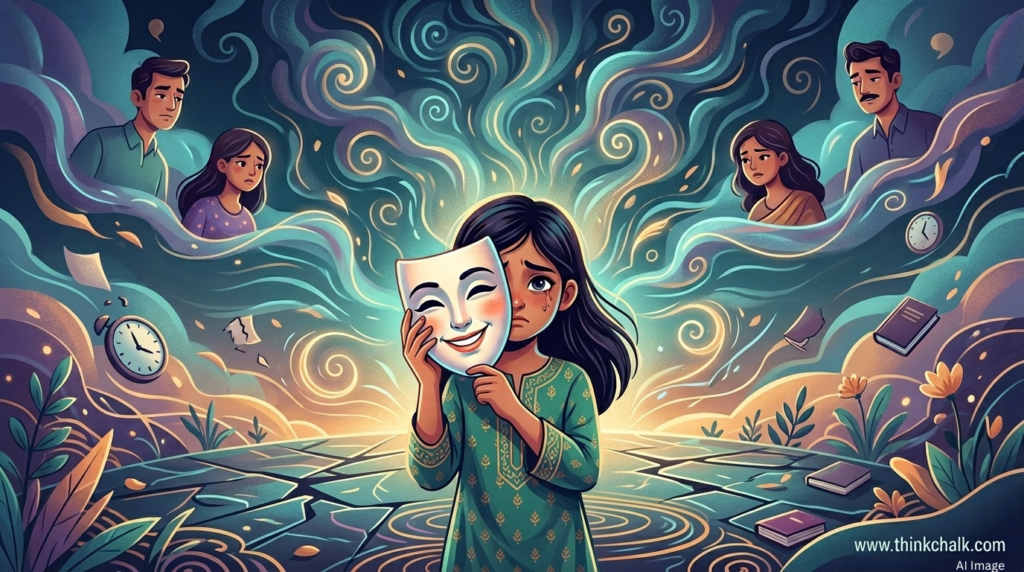
These words are usually said with love. Parents want their children to thrive in a challenging world. But sometimes, without realising it, these same words send another message: Your feelings are not important.

When a child says, I’m tired, and we reply, Yeh koi baat hoti hai?

When a teenager says, Mujh se aur nahin ho raha, and we say, Drama band karo.

That is where the silence begins.

Continue reading “Mental Health Is Not “Drama”: Why Does Even “Strong Bachay” Need Support”

Career Confusion: Science, Commerce, Arts or “Bas jo mile”

Why teens feel lost about subject choices, fear disappointing parents, and struggle to see value beyond “doctor, engineer, CSS.”

Choosing subjects after middle school is one of those small crossroads that feels enormous when you’re living it, both for the child and the parents. In Pakistan, that crossroad often looks like a short menu: Science (pre-med/pre-engineering), Commerce (business/accounting), Arts (humanities/social sciences), or “Bas jo mile”, take whatever seat opens up. Why does a 14- or 15-year-old face such pressure and confusion? Let’s unpack the feelings behind the choices and offer a kind, practical way forward for parents and families.

Continue reading “Career Confusion: Science, Commerce, Arts or “Bas jo mile””

Why Do Teens Leave School? A Simple Reflection on Gender, Culture & Education in Pakistan

Every child deserves to learn with confidence, feel safe while travelling to school, and dream about a bright future. But for many teenagers in Pakistan, especially girls living in rural areas, staying in school becomes more challenging as they grow older. When a girl drops out, her education doesn’t just pause; her opportunities, independence, and future possibilities shrink with it.

In this reflective piece, I aim to explore why many adolescent girls drop out of school and how parents, teachers, and communities can collaborate to support their continued learning.

What the numbers show and what families feel

Research from the World Bank highlights that girls in rural Pakistan face the highest dropout rates due to poverty, early marriage, unsafe travel, and lack of school facilities. Challenges and Solutions for Girls’ Education in Pakistan.

Continue reading “Why Do Teens Leave School? A Simple Reflection on Gender, Culture & Education in Pakistan”

AI, School Stress, and the New Classroom: How Technology Is Reshaping Education in Pakistan

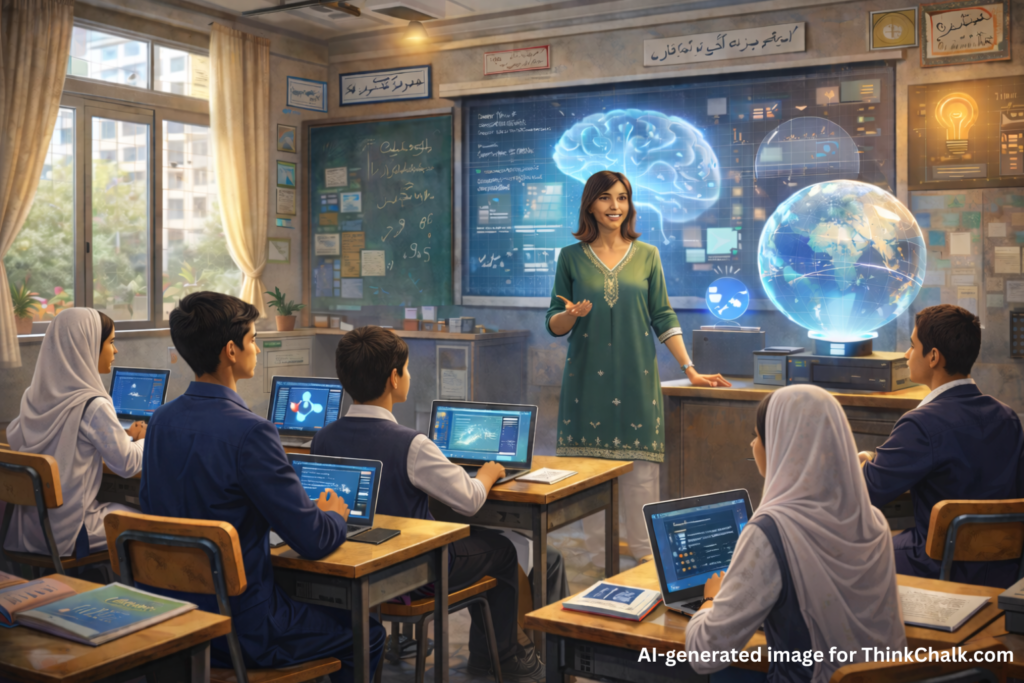
AI Generted Image for Think Chalk blog

In the winding corridors of our schools, whether in Karachi, Lahore, or a remote village in Sindh or Balochistan, echoes of chalk on slate and the crack of old benches still dominate the classroom. As a teacher-mentor, I often reflect on the immense pressures our children face: cramming for board exams, rote learning, large class sizes, and limited time with overworked teachers. Now, as artificial intelligence (AI) begins to infiltrate global classrooms, the question arises: Could AI transform education in Pakistan and if so, how?

In this article, I explore the promise and the perils of AI in Pakistani schools. I try to see it through the eyes of concerned parents, busy teachers, and hopeful students, rooted in South Asian realities.

Continue reading “AI, School Stress, and the New Classroom: How Technology Is Reshaping Education in Pakistan”

Teen Academic Burnout: A Growing Crisis We Can No Longer Ignore

I’ve been thinking a lot about the quiet exhaustion I often notice in teenagers today, the way their shoulders slump under the invisible weight of expectations, or how their eyes lose a little of their spark as exams approach. Sometimes, when I’m mentoring students or talking to parents, I find myself asking: When did learning become so heavy for our children?

In Pakistan, where grades are tied to prestige, opportunity, and sometimes even family honour, academic pressure doesn’t just sit in school bags; it follows students into their homes, their sleep, and their identities. And whether we admit it or not, teen academic burnout has slowly become a national concern.

What Exactly Is Teen Academic Burnout?

Academic burnout is more than just being “tired of studying.” Psychologists describe it as a state of emotional, mental, and physical exhaustion caused by long-term academic stress (Schaufeli et al., 2002).

Continue reading “Teen Academic Burnout: A Growing Crisis We Can No Longer Ignore”

Navigating the First Steps: 4 Career Challenges Students Face After Graduation

I often look back on my school and college days with a smile, the laughter with friends, the excitement before exams, and the small victories that felt like the world to us. Many of you, whether parents or students, can probably relate to those carefree moments.

But time changes everything, priorities, definitions of success, and even what the word “memorable” means to today’s youth.

Yet, one thing remains constant across generations: the question that echoes in every young graduate’s mind, What should I do after college?

Some students seem to have it all figured out: career goals, timelines, and strategies. Others, however, find themselves standing at the crossroads, uncertain about which direction to take. This uncertainty often brings anxiety, especially in a world that demands both academic excellence and “real-world” experience.

Continue reading “Navigating the First Steps: 4 Career Challenges Students Face After Graduation”