Category: School & Society

Your Teenager’s Best Counsellor Sits One Row Behind Them

Pakistani schools are full of young people who already know how to show up for each other. We just haven’t trained them yet.

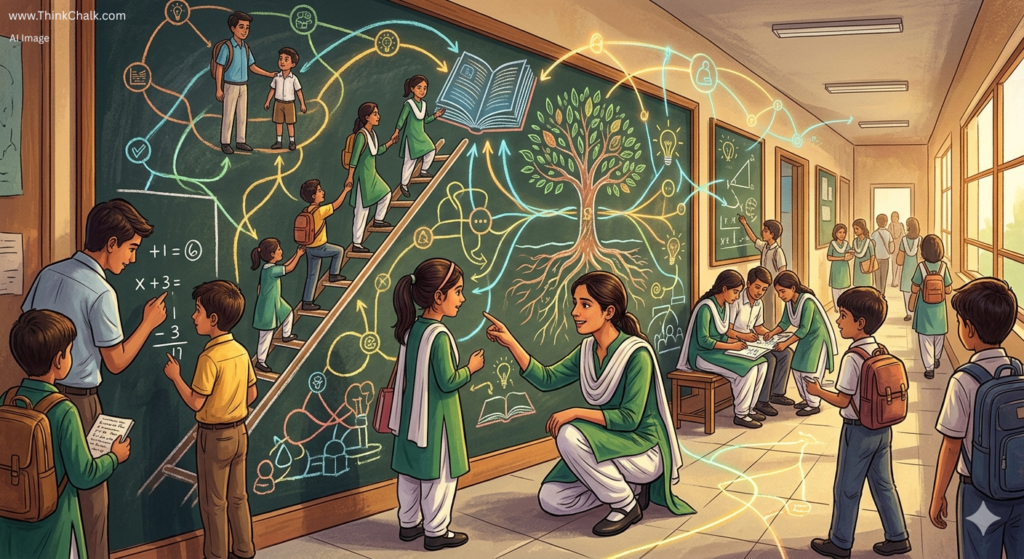
I was observing a mentee’s class last term, one of those routine observation visits where you sit quietly at the back with a notepad and try not to distract anyone. The lesson was moving along well enough. But what caught my attention had nothing to do with the teaching.

In the third row, a Grade 10 student had quietly shifted her chair a few inches closer to the girl beside her, a Grade 8 student who had recently transferred from another school and still carried that particular kind of stillness that new students wear when they are not yet sure where they belong. Without a word, the older girl slid her open notebook across. Pointed to something. The younger one nodded. A small moment. Thirty seconds, at most.

But I stopped writing my observation notes entirely.

Nobody had arranged that exchange. Nobody had trained the older student to do it. And yet something genuinely useful had just happened, something a teacher standing at the front of the room could not have engineered, no matter how skilled.

That is the thing about peer support. It finds its own way in. The question is what happens when we decide to take it seriously.

Continue reading “Your Teenager’s Best Counsellor Sits One Row Behind Them”
Why Do Teens Leave School? A Simple Reflection on Gender, Culture & Education in Pakistan

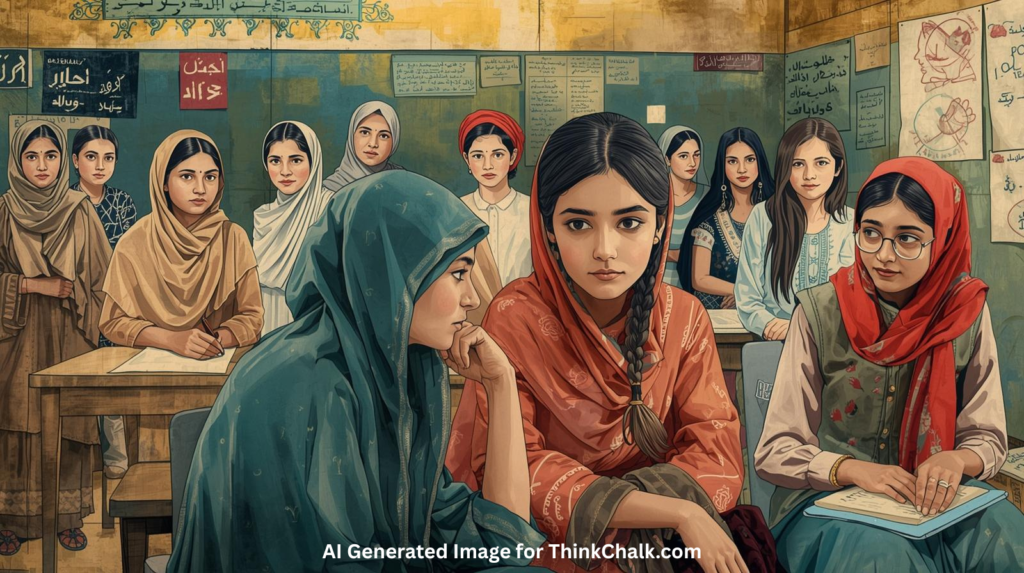
Every child deserves to learn with confidence, feel safe while travelling to school, and dream about a bright future. But for many teenagers in Pakistan, especially girls living in rural areas, staying in school becomes more challenging as they grow older. When a girl drops out, her education doesn’t just pause; her opportunities, independence, and future possibilities shrink with it.

In this reflective piece, I aim to explore why many adolescent girls drop out of school and how parents, teachers, and communities can collaborate to support their continued learning.

What the numbers show and what families feel

Research from the World Bank highlights that girls in rural Pakistan face the highest dropout rates due to poverty, early marriage, unsafe travel, and lack of school facilities. Challenges and Solutions for Girls’ Education in Pakistan.

Continue reading “Why Do Teens Leave School? A Simple Reflection on Gender, Culture & Education in Pakistan”

AI, School Stress, and the New Classroom: How Technology Is Reshaping Education in Pakistan

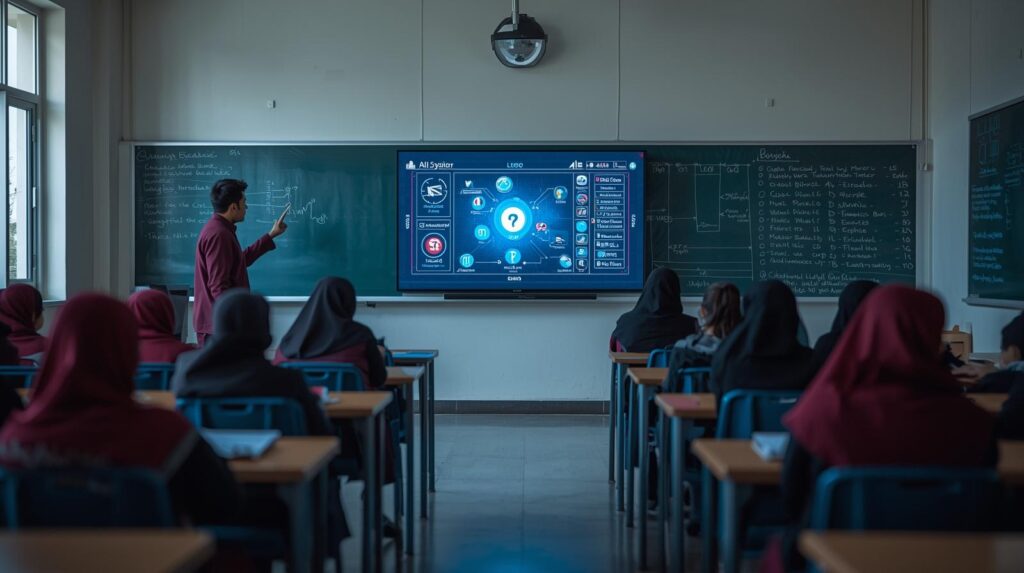
AI Generted Image for Think Chalk blog

In the winding corridors of our schools, whether in Karachi, Lahore, or a remote village in Sindh or Balochistan, echoes of chalk on slate and the crack of old benches still dominate the classroom. As a teacher-mentor, I often reflect on the immense pressures our children face: cramming for board exams, rote learning, large class sizes, and limited time with overworked teachers. Now, as artificial intelligence (AI) begins to infiltrate global classrooms, the question arises: Could AI transform education in Pakistan and if so, how?

In this article, I explore the promise and the perils of AI in Pakistani schools. I try to see it through the eyes of concerned parents, busy teachers, and hopeful students, rooted in South Asian realities.

Continue reading “AI, School Stress, and the New Classroom: How Technology Is Reshaping Education in Pakistan”

The Silent Crisis: Why Young Teachers Feel Discontent in Today’s Classrooms

A composite, real-life moment: it was a Thursday morning staff room at a mid-sized secondary school, the rattling of tea/coffee cups, a lesson planning meeting was on the go, and a cluster of early-career colleagues leaned against a counter. One of them, a bright, newly qualified teacher, scrolled through recruitment adverts on their phone and muttered, “Why am I doing this for that?” Another answered with a wry smile and a string of sarcasm about ‘team-building’ that meant yet another unpaid evening. A third rolled their eyes and said the work “would be fine if we all wanted to live at school.” The mood felt less like anger and more like a brittle, constant complaint: quick jabs, ironic comments, and an overall tone of pessimism that made it hard to plan long-term for the department. This is a scene I’ve seen repeated across schools, not a single scandal or headline, but dozens of small, corrosive interactions that together shape a school’s culture.

Continue reading “The Silent Crisis: Why Young Teachers Feel Discontent in Today’s Classrooms”