Tag: Adolescent Development

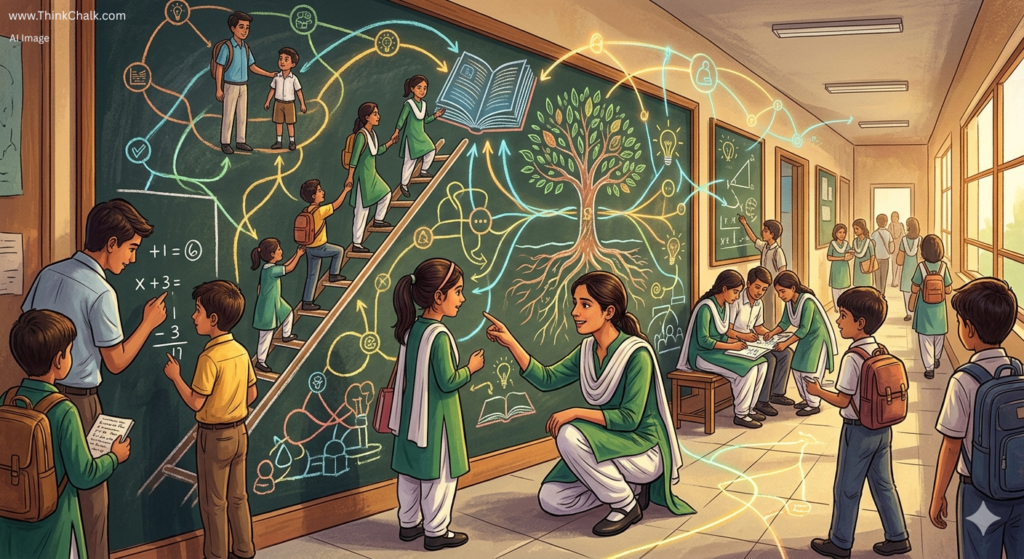
Your Teenager’s Best Counsellor Sits One Row Behind Them

Pakistani schools are full of young people who already know how to show up for each other. We just haven’t trained them yet.

I was observing a mentee’s class last term, one of those routine observation visits where you sit quietly at the back with a notepad and try not to distract anyone. The lesson was moving along well enough. But what caught my attention had nothing to do with the teaching.

In the third row, a Grade 10 student had quietly shifted her chair a few inches closer to the girl beside her, a Grade 8 student who had recently transferred from another school and still carried that particular kind of stillness that new students wear when they are not yet sure where they belong. Without a word, the older girl slid her open notebook across. Pointed to something. The younger one nodded. A small moment. Thirty seconds, at most.

But I stopped writing my observation notes entirely.

Nobody had arranged that exchange. Nobody had trained the older student to do it. And yet something genuinely useful had just happened, something a teacher standing at the front of the room could not have engineered, no matter how skilled.

That is the thing about peer support. It finds its own way in. The question is what happens when we decide to take it seriously.

Continue reading “Your Teenager’s Best Counsellor Sits One Row Behind Them”
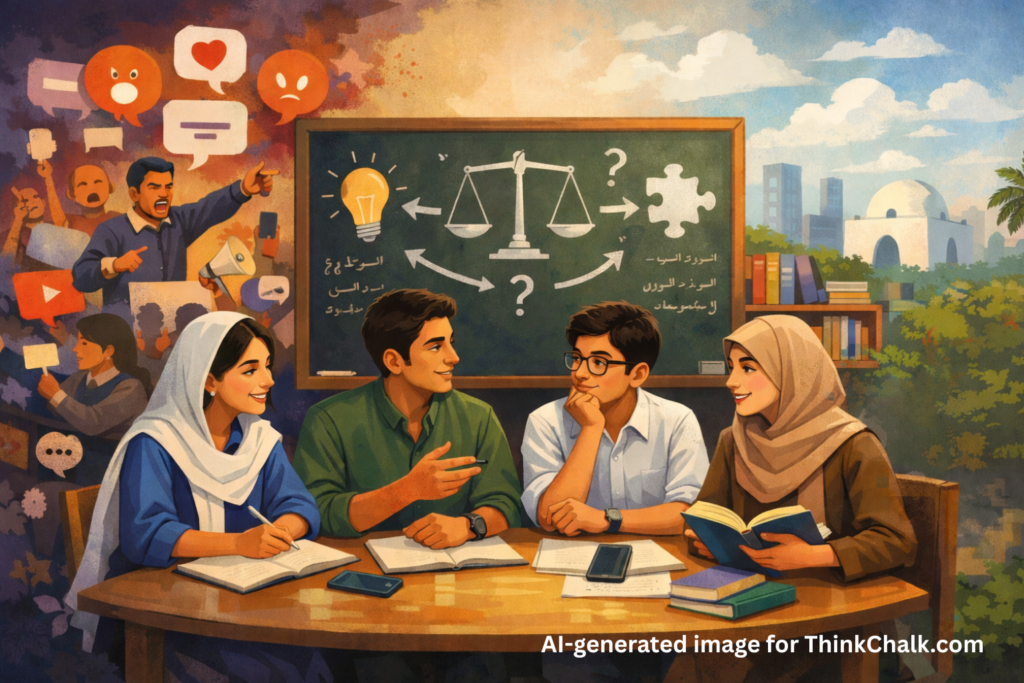

Helping Teenagers Think in an Age of Polarisation

Why schools must teach thinking, not just information, in a world of global uncertainty

Teenagers today are growing up in a world that feels more connected than ever, yet more divided than ever. A student scrolling through social media in Karachi, Gilgit, Lahore, or Hunza can instantly encounter intense debates about wars, political conflicts, cultural identity, religion, or global injustice. News travels fast, but so do opinions. Within minutes, a teenager can be exposed to strong emotional narratives that demand loyalty, outrage, or immediate judgment.

Yet many young people are navigating this information-heavy world without the tools to process it critically.

The challenge facing education today is not only about what students learn. Increasingly, it is about how students learn to think about the world around them.

Continue reading “Helping Teenagers Think in an Age of Polarisation”

Why Gandalf Chose Frodo and What It Teaches Us About Growing Up

“Even the smallest person can change the course of the future.” — J.R.R. Tolkien

The first time I watched The Lord of the Rings: The Fellowship of the Ring, I was just a teenager. I enjoyed the battles, the adventure, and the mysterious beauty of Middle-earth. But when I revisited the movie years later, one scene hit differently when Gandalf tells Frodo that he must take the Ring to Mordor.

Back then, I didn’t think much about it. But now, that moment feels deeply human. Gandalf, one of the wisest beings in Middle-earth, chooses a small, humble hobbit for the world’s most dangerous task. Why Frodo? Why not someone stronger or smarter?

The more I thought about it, the more I realised Frodo’s journey is not just about fantasy. It’s about what every young person faces growing up: responsibility, fear, identity, and the courage to keep moving forward even when the weight feels too heavy.

Continue reading “Why Gandalf Chose Frodo and What It Teaches Us About Growing Up”