Category: Digital Parenting & Child Safety

The Mirror in the Palm of Their Hand

What happens to a teenager’s identity when no one, not even their technology, ever disagrees with them?

I was running a session with a group of sixteen and seventeen-year-olds at a Karachi school last term. We were talking about AI, how it works, how they use it, and what they tell it. At some point, almost without thinking, I asked a question I hadn’t planned.

“How many of you have ever disagreed with your AI? Like, actually pushed back on something it said?”

Silence. A few uncertain looks around the room. Then, slowly, one hand.

“Sir, maine ek baar try kiya tha, but it just agreed with me anyway.” (Sir, I tried it once, but it just agreed with me anyway.)

The room laughed. I laughed too. But on the drive home, the less funny it seemed.

Continue reading “The Mirror in the Palm of Their Hand”

The Loneliest Generation: Why Pakistani Teenagers Feel Alone in a Connected World

Being seen online is not the same as being known at home.

I remember sitting in a parent workshop in Karachi last year when a father raised his hand and said something I have not been able to forget.

“Sir, mera beta ghar mein rehte hue bhi ghar mein nahin hota.” (“Sir, my son lives in our home, but he is never really there.”)

He wasn’t talking about physical absence. His son was in the next room, phone in hand, surrounded by voices from a screen. The father hadn’t lost him to rebellion or bad company. He had lost him to something quieter. A distance with no name. A kind of presence that isn’t really there.

His son has hundreds of followers. He posts. He scrolls. He replies. But when was the last time anyone, including the people who love him most, asked him something real?

He has 847 followers. He came home from school today and didn’t speak to a single person he trusts. That’s not a connection. That’s performance.

Continue reading “The Loneliest Generation: Why Pakistani Teenagers Feel Alone in a Connected World”

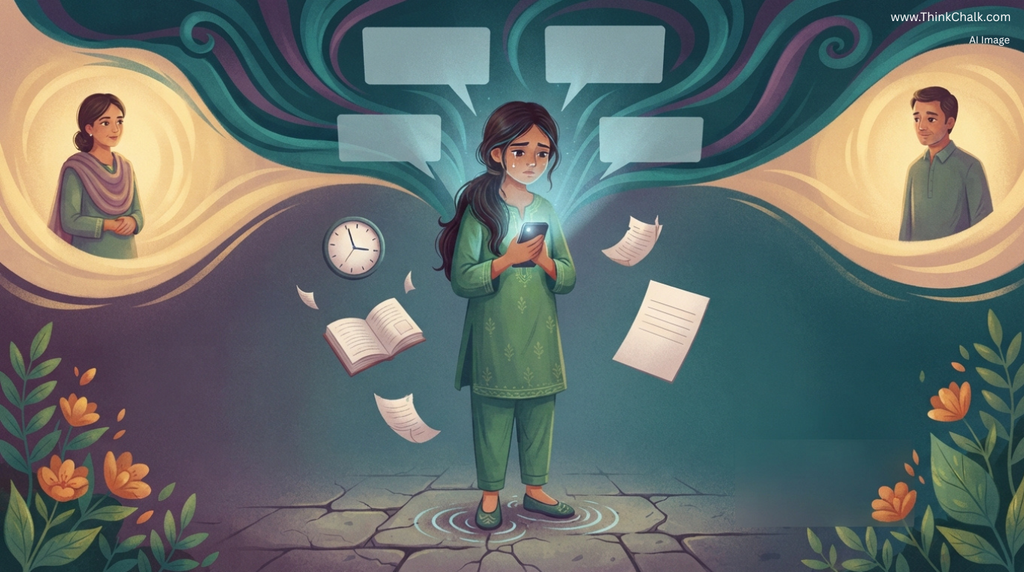
Is Your Teenager Dating an AI?

When emotional connection moves from home to a chatbot, what are we really missing at home?

A few weeks ago, a parent came to me after my class. She was not panicking. She was confused.

“Sir, mene mere bete ka phone check kiya toh usne kisi se ghanton baat ki thi. Phir pata chala… koi insaan hi nahin tha.” (Sir, I checked my son’s phone and saw he had been talking to someone for hours. Then I found out… it wasn’t a person at all.)

Her son, seventeen, O-Levels, quiet at home, had been spending two to three hours every evening in deep conversation with an AI chatbot. Not for homework. Not for any school project. He was sharing how lonely he felt. How he felt misunderstood. How he wished someone at home would ask him something other than “padhai kaisi chal rahi hai?” (How is your studying going?)

The chatbot had been listening.

Continue reading “Is Your Teenager Dating an AI?”

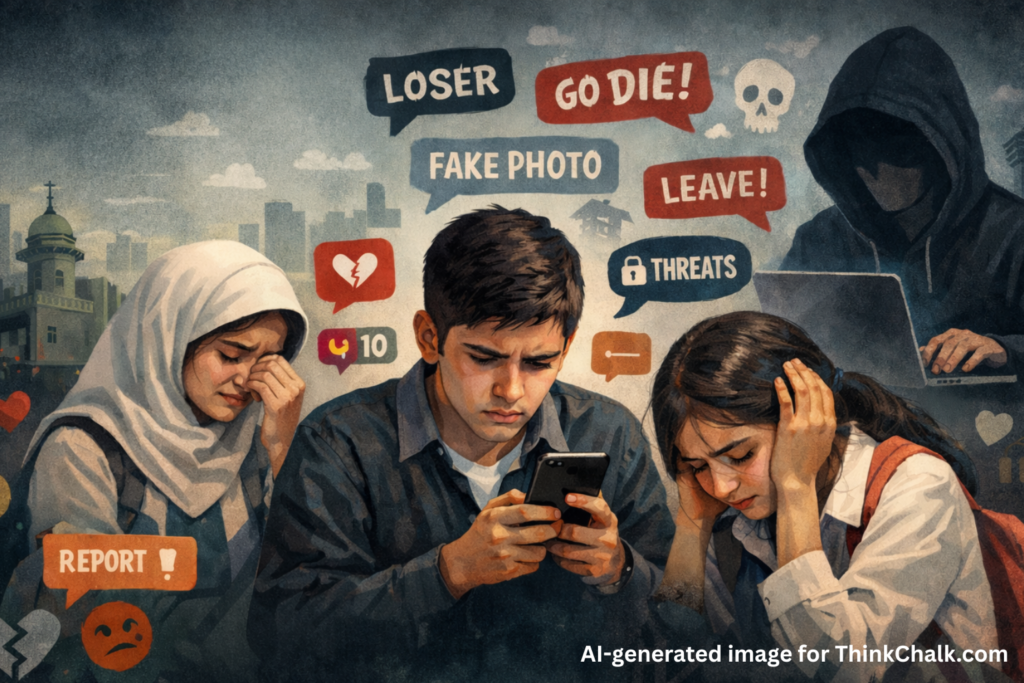
Not ‘Mazaaq’: Bullying & Cyberbullying in Pakistan, How It Hurts Our Students and What Schools Can Do Better

There’s a moment many teachers recognise. A student who used to raise their hand is now sitting quietly. A confident child begins asking, ‘May I go to the washroom?’ as soon as group work starts. Someone’s attendance slips from Monday to Wednesday, then a full week. When you finally ask, softly, ‘Kya masla hai?’ you often get the same answer: ‘Nothing, miss/sir. Bas… aise hi.

In our schools across Pakistan, bullying rarely arrives as a clear headline. It shows up like a fog: small comments, private jokes, class WhatsApp groups, a nickname that becomes a label, a photo edited and shared, a voice note forwarded ‘for fun.’ The child keeps going to school, but something inside them stops feeling safe.

And that’s the real issue: bullying isn’t only about a bad moment. It’s about a student’s sense of safety, belonging, and izzat.

Continue reading “Not ‘Mazaaq’: Bullying & Cyberbullying in Pakistan, How It Hurts Our Students and What Schools Can Do Better”

Nomophobia: Understanding the Rising Digital Addiction Among Students

How parents and teachers can help children balance their digital lives

Have you ever seen your teen panic when their phone battery dies or when there’s no Wi-Fi signal? Recently, I came across a research article on ResearchGate that introduced me to the term “Nomophobia.” To my surprise, it perfectly described a growing issue I often observe among students: an emotional dependence on their mobile phones. Among high school and college students, what’s the one thing they can’t seem to live without? You guessed it, their mobile phones. In fact, research shows that many adolescents would rather lose a pinky finger than their cell phone! This bizarre attachment has led to a growing number of students who prefer texting or tweeting instead of face-to-face conversations.

This irrational fear of being without a mobile phone is called Nomophobia, a short form for “no-mobile-phone phobia.” It’s the fear of being disconnected, whether because of a low battery, no signal, or simply leaving the phone behind.

Continue reading “Nomophobia: Understanding the Rising Digital Addiction Among Students”

Why Parents Need to Be Aware of What Content Their Child Is Browsing

The Role of Parents in Keeping Their Child Digitally Safe and Secure

Yesterday, I received a call from one of my students’ mothers. Her question was simple yet deeply significant: Should I allow my 15-year-old to have a cellphone? She explained her concerns that teenagers often spend all their free time glued to their screens, and worse, that her child might stumble upon inappropriate or harmful content online. Her voice carried both love and fear, emotions that every parent today can relate to.

In today’s digital world, these concerns are not exaggerated. Children have easy access to thousands of websites and social media platforms. Whether through smartphones, tablets, or laptops, the internet is now deeply intertwined with how they learn, communicate, and express themselves, especially after the pandemic’s shift toward virtual learning.

Continue reading “Why Parents Need to Be Aware of What Content Their Child Is Browsing”