Teenagers, AI companions and the hour after a bad answer
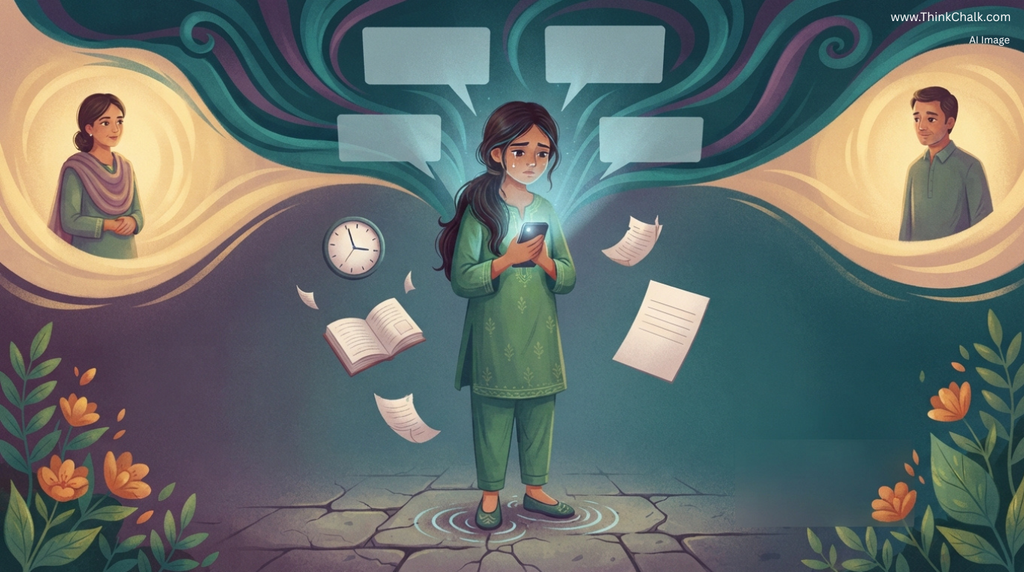
Last term, I finished a session with a Grade 11 class in Karachi. While the others packed their bags, one girl stayed back. She waited until the room was empty. Then she told me what an AI app had said about a decision she had made at home. It had told her she was in the wrong, and that most people would agree.
She told me this after the app had already answered. Then, almost as an afterthought, she added: “Sir, marks bhi kam aa rahe hain.” (Sir, my marks are dropping too.)
I have thought about the order of that conversation ever since. The app came first. The teacher came last.
Not the argument, but what came after
I want to be careful here. I am not saying the app caused her marks to fall. Nobody can say that. There was an argument at home. There was an answer from the app. And there was a girl carrying that answer alone, probably for days. These things arrived together, and no one can pull them apart.
What I noticed was something quieter than the argument. She no longer trusted her own decision. She had stopped asking whether she was right and started asking whether she was the problem. Every parent knows this feeling in a child: the confidence slowly draining out.
A voice that sounds sure
Think about what the app actually knew. It heard one side for a few minutes. It knew nothing about her family, her grandmother’s health, or what was said before the argument started. Yet it answered in a calm, certain voice.
To a 16-year-old, certainty can feel like authority. Common Sense Media’s 2025 survey of American teens found that about one in three teens who use AI companions have chosen to discuss serious matters with them rather than with real people. The same research found that younger teens trust AI companions significantly more than older teens do. So, the younger the teenager, the more weight the answer may carry.
This is a US survey, so we should not copy its numbers to Pakistan. But we can take the pattern seriously. A private app has one big difference from a friend’s or a teacher’s app: nobody sees the answer as it arrives. A hurtful comment from a cousin gets noticed at the dinner table. A hurtful answer from an app sits on the screen, and she carries it alone.
Why this matters in our homes
In many Pakistani families, teenagers do not have many places to take out their private worries. A 2025 analysis in The Friday Times, citing a UNICEF assessment, reports that one in four Pakistani adolescents experiences symptoms of anxiety or depression, and only a small fraction ever receives professional help. Add a household where “don’t tell outsiders” is a value, and a phone that never sleeps becomes the easiest place to ask.
I say this without blaming anyone. Parents did not choose this, and neither did teenagers. Schools now have policies for AI cheating. Very few have any plan for how AI could cause emotional harm. We are ready for the student who copies an essay. We are not ready for the student who was quietly hurt by an answer.
The hour after
Adults cannot control which apps a teenager opens. But we can be the human voice that arrives in the hour after a hurtful answer. One simple tool is the 3Rs, a safety model used for online harm: Recognise, Respond, Report. Here is how I adapt it for this situation.
- Recognise. It heard one side, for a few minutes, with no idea who you are or what your family is. It is an opinion from a product, not a verdict on you. This is the card I would want every teenager to keep on her phone.
- Respond. Do not act on the answer alone. Talk to one real person who knows you before you decide anything about yourself.
- Report. Tell a trusted adult what it said, especially if it made you doubt yourself. Telling is not tattling.
For teachers, the question I now use is: “What did it say, and which part stayed with you?” The second half matters most, because the part that stays is the part that hurts.
For parents, the hardest skill is to hear the answer without defending yourself and without arguing with the app. If your daughter says the app called you unfair, your first job is not to win. Your job is to listen, and then say, “I’m glad you told me. Let’s look at it together.”
I often wonder how many teenagers are carrying an answer right now that no adult has seen. The girl in my class was lucky, because she decided to stay back. The question I keep returning to is this: if your teenager got a hurtful answer tonight, would she know that you are the one to tell?